Authentic representation has become one of the most important conversations happening in Hollywood, yet it remains an area where the industry still has plenty of room to grow. Actress, author, and advocate Tal Anderson has quickly become one of the most refreshing voices helping push that conversation forward.
After making a huge impact as Becca King in the first season of The Pitt, Anderson returns for season two with expanded storylines and a deeper opportunity to continue exploring the layered and heartfelt journey of Becca.
Outside of acting, Anderson has become an increasingly important advocate in the ongoing conversation surrounding autism representation in Hollywood. Through both her on-screen work and her children’s book series, she continues to challenge outdated narratives while creating stories rooted in honesty, nuance, and lived experience.
During my recent conversation with Anderson, we discussed returning as Becca King on The Pitt, the realities of navigating sets as an autistic performer, why authentic neurodivergent storytelling still has a long way to go, and how audiences have finally started to embrace autism.
Scott Menzel: First and foremost, congratulations. You made such a memorable impression in the first season of The Pitt, and now you get to return in season two with even more storylines. How does it feel stepping back into this world?
Tal Anderson: It’s exciting, and honestly, it feels like a gift. I feel incredibly lucky to be part of a show that is having such a major impact on people. To be included in something that audiences are connecting with on this level is really amazing.
Scott Menzel: I also have autism, so I always appreciate having these conversations with fellow members of the neurodivergent community. Autism is often described as an invisible disability. How do you personally explain your experience with autism to people who may not fully understand it?
Tal Anderson: I’m autistic, and I also have several co-occurring disabilities. I’m hypotonic with low muscle tone, I have a specific math disability that I learned to work around in school and college, and I also have an auditory processing disorder, which makes it difficult to process spoken language, especially under stress or in noisy environments. All of those are technically invisible disabilities, and I’m dealing with all four of them at the same time.
My experience with autism and disability is that I have to advocate for myself constantly, even when people do not understand why that advocacy is necessary.
Scott Menzel: That advocacy can be exhausting because unlike a visible disability, there is often no immediate understanding from others. With autism, every individual’s experience is different, so there is no singular version of what it looks like.
Tal Anderson: Exactly. It’s not one-size-fits-all at all, and it took me a long time to even learn how to explain it for myself.
Scott Menzel: If you do not mind me asking, when did you first learn that you were autistic?
Tal Anderson: I found out when I was about 15 years old in high school. I had actually been diagnosed very young, but I didn’t know until I was in high school.
Scott Menzel: That had to be a lot to process at an age when you are already trying to understand yourself.
Tal Anderson: It actually explained a lot.
Scott Menzel: Was there ever a television show or movie featuring an autistic character that made you feel personally seen?
Tal Anderson: Not personally, no. As an advocate, I’m happy to see any version of autism on screen that is authentically written and represented, but I still wish there were far more diverse portrayals.
I’m an adopted autistic adult woman who is mixed Korean American. I live independently, but I also rely heavily on support from multiple sources. Sometimes I need a lot of help, and other times I’m very independently capable. I drive, I take care of my pet, and I manage my workload successfully, but I also have anxiety and I’m not very physically strong. I’ve never seen a character quite like that on screen.
Usually you get one extreme or the other, someone portrayed as fully dependent or someone portrayed as hyper-capable. I’m neither of those things. I’m independent, hardworking, and capable, but I also need support to be those things, and that nuance is rarely represented.
Scott Menzel: One series that stood out to me was As We See It because it showcased multiple autistic perspectives instead of trying to define one universal experience.
Tal Anderson: Oh my gosh, yes. That was such a good show. Those actors were amazing and it really was a beautiful series.
Scott Menzel: As an actor with autism, have you ever felt misunderstood on set or found that people do not fully grasp the way your mind processes things during production?
Tal Anderson: Absolutely. Sometimes I find myself conflicted with the writing of an autistic character because I don’t always agree with how they are portrayed. I try to bring authenticity through my own lived experience, and sometimes that works and sometimes it doesn’t.
There are definitely moments when a neurotypical person cannot fully understand how my mind is processing everything on set. I experience things differently, and my interpretation of what I hear and see is very different.
When I’m on set, I’m processing how my character reacts physically to the environment, while also taking in lights, sounds, dialogue, and movement all at once. It takes me a minute to get to the right place. I’ve been very fortunate to work with directors who give me that space and allow me to work it through.
Scott Menzel: Before The Pitt, there were series like Atypical, As We See It, and Everything’s Gonna Be Okay that genuinely tried to shine a light on the autism community, but none of them fully broke into the mainstream. Why do you think that happened?
Tal Anderson: I think those shows were truly trying to be inclusive, and they were setting important examples for representation by centering autistic perspectives.
But I also think they leaned heavily on storylines where the disability itself became the central focus. Instead of simply telling stories about life that authentically included autistic people, the autism often became the story. Those shows opened doors, though. They weren’t perfect, but they absolutely helped move the conversation forward.
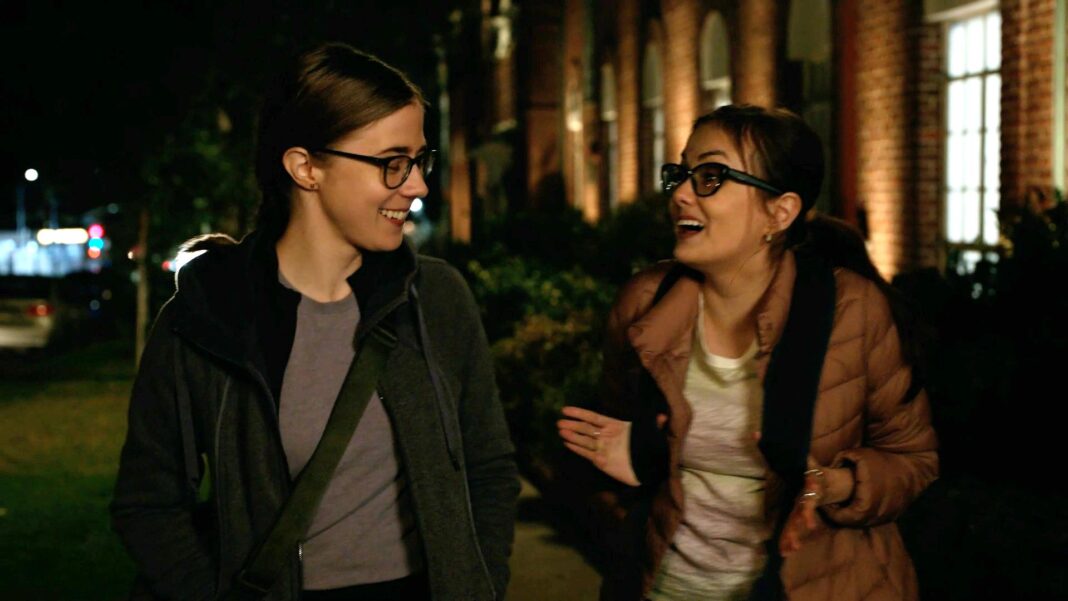
Scott Menzel: Which makes the success of The Pitt so fascinating because audiences have connected to these characters first as human beings. What has it been like seeing the response to Becca and Mel resonate so strongly?
Tal Anderson: It’s been wild in the best possible way. Not just as an actor, but as an actually autistic adult woman, it has been incredibly validating to see so many people in Becca’s corner fighting for her independence and bodily autonomy.
I did not know if audiences would respond that way, but seeing people agree that she deserves to have agency over her own life has made me so happy. At the same time, people still love Mel and deeply support the sister relationship. The writing is just so beautiful.
Scott Menzel: Congratulations are also in order because you have a second book coming out. What inspired you to continue that journey?
Tal Anderson: Thank you. The series was always planned as three books. Michael Richie White, the illustrator, and I wanted to start a conversation with younger children who feel the way we did when we were little. The goal was to help them feel okay about being different and encourage them to be themselves.
We also wanted parents to be able to engage with their children and discuss what the character is feeling and experiencing. We got wonderful feedback after the first book, and kids especially loved seeing my cat pop up throughout the story. The second book follows the same character, but this time she is navigating school instead of home.
Scott Menzel: Have there been any fan interactions that have especially stayed with you?
Tal Anderson: So many. It touches me every time because what fans say is exactly what I always felt growing up, never seeing a character I could identify with.
I’ve had hundreds of neurodivergent fans reach out who relate to either Mel or Becca, and many who relate to both. What amazes me most is how many women say they are seeing themselves in these two characters on screen for the first time. As an autistic woman, that is incredibly validating.
Scott Menzel: If you could play any other character on The Pitt, who would it be?
Tal Anderson: Joy Kwon, without question. She is so capable, so decisive, and so clear about what she wants out of life. I loved that scene where she talks about understanding her own limitations so she doesn’t burn out. That really resonated with me. I love Nurse Dana too, but I don’t think I’m badass enough to play her.
Scott Menzel: Final question. At Awards Buzz, we always ask this: outside of The Pitt, what show or performance do you think deserves Awards Buzz this year?
Tal Anderson: I absolutely love Shrinking. That ensemble is so great, it’s hilarious, and I’m a huge Michael Urie fan. His chemistry with Jason Segel is fantastic, and honestly the entire cast is terrific. The writing is outstanding.
I’m also a giant fan of Have I Got News for You. It’s such a smart, funny show and Amber Ruffin is brilliant.
With both her return to The Pitt and the continued expansion of her children’s book series, Tal Anderson is doing far more than building an impressive career. She is helping reshape what authentic neurodivergent representation can look like in mainstream entertainment. Anderson’s ongoing advocacy combined with the stories that she will continue to tell is providing audiences something Hollywood has failed to provide: the chance to feel heard and hopefully understood.