Magazine has the perfect setup to be this generation’s Whit Stillman movie. An office full of literary hopefuls risking careers on romance in a pre MeToo and pre Covid New York where power gets the last word and it hadn’t become a pattern anyone recognized yet. A literary magazine is the most snarkiest and verbose room in New York, which is exactly what Stillman built a career on, kids in nice clothes talking themselves into and out of status all night. Instead the movie kinda just dances quite literally around these ideas.
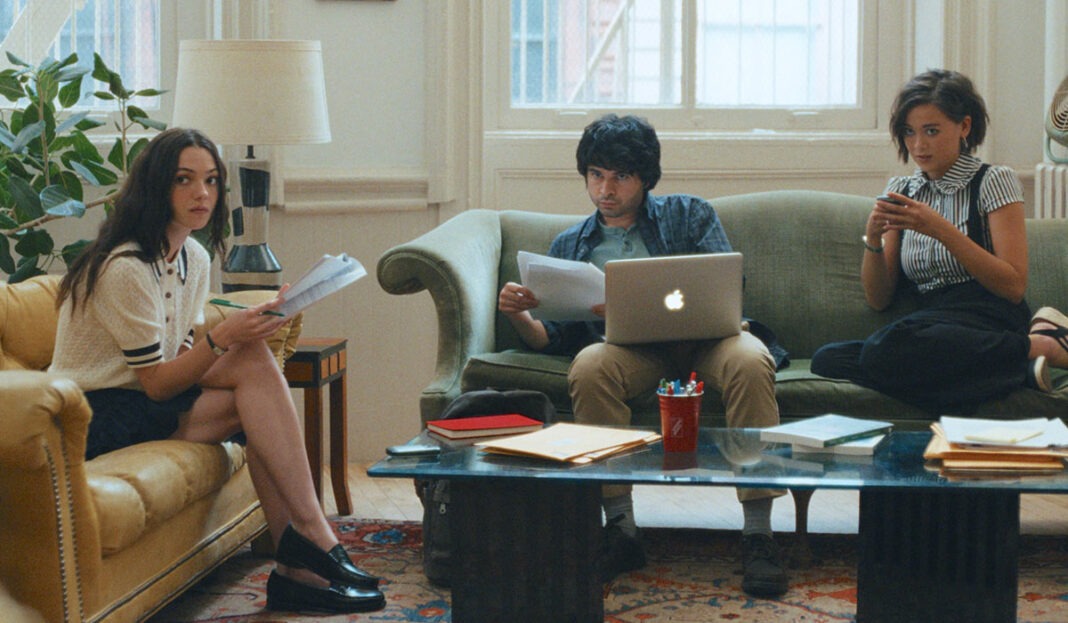
The setup is loosely inspired by Alexandra Pechman’s own life. Nora is played by Lily McInerny. She wants to be a poet and lands a 2011 internship at Platen, a fancy old literary magazine where you need to be rich or know somebody to get in the door. She’s neither. She spends the first stretch trying to get in the same room as the head editor. The other interns are Tabitha and Leonard, played by Lukita Maxwell and Daniel Zolghadri. All three are chasing the classic post grad New York arts student dream. Land the one job that probably doesn’t exist by showing up after your unpaid internship at the right parties and not embarrassing yourself. Then Nora gets involved with a colleague above her and her life plan is suddenly on the line.
Lily McInerny is great here. She has these huge expressive eyes and the movie knows it. The camera just parks on her face while everyone around her is performing how cool they are. She is great as the innocent kid who desperately wants in and the one already clocking early when she shouldn’t. She has such a star presence on screen, I can see this actress blowing up soon. The other one is Joshuah Melnick as Thomas, the deceptive young good looking boss everyone in the office fawns over. He’s the guy who sends the long email that makes you feel like the only person who exists. Slips you a note or texts you from across the office. Melnick is about to be JFK in Thomas Vinterberg’s Netflix series and you can tell from what he puts on screen here that he’s going to crush it. Jake Lacy plays Mickey the big boss editor and he’s good as ever. Smug in a nice suit telling the interns to go to the literary parties and impress people, which is basically the whole movie’s tone. Iris Apatow plays Daphne, the most annoying person in every room she walks into. An influencer type looking for access before there was a TikTok and exactly the kind of rich girl who fit right into the downtown scene.
The craft honestly knocked the wind out of me and there’s so much rising talent here starting with Valeria de Felice’s production design on something as simple as the Platen office and Alex Ashe’s cinematography, the guy who’s first movie he shot was Ira Sachs’ Peter Hujar’s Day. Michelle J. Li’s costumes were one of my favorite elements of Shiva Baby and she grew even further here. Every 2011 NYC status quo member is accounted for, from office females’ thrifted Brooklyn vintage look to Iris Apatow’s extreme downtown looks, but just everyone in this movie dresses beautifully straight out of the best fits from SoHo. The soundtrack is Sky Ferreira and Beach House and some of the least inspired elements (more on that soon).
The screenplay is unfortunately where the movie falls short. It never gets sharp enough, mean enough, or funny enough. It starts with the power dynamics, but doesn’t say much that feels new about them. Everyone at the magazine is sleeping with everyone else, but the imbalance has the general men can turn those relationships into careers, while the women are left carrying nearly all of the risk. What I did like is that the movie understands the people holding the power are often barely older, just as broke and faking it too. What’s missing is the younger characters defending themselves and their ridiculous opinions with such fierce conviction that the conviction itself becomes part of the joke. Or the potential acidic deadpan dialogue felt sitting there in every talented actor here equipped to handle but weren’t given the weaponry.
The parties are built as the crux of the whole movie. Book launches or ones that turn into afterparties, but these scenes never claim enough of an identity of their own and it focuses too much on these interns not fitting in.
Which is why the writing bugs me so much. Lena Dunham’s Girls is set in virtually the same time period, so you’re going up against a show where the main character could’ve been interning at this magazine, and it runs on people being wrong out loud. While that show never allowed their characters make the mistake of letting their narcissism take the steering will. Magazine lets Nora get away with everything. Sex in Girls is awkward and unflattering, but here there’s no shame in it. The movie mistakes power and being taken advantage of for love which works as a setup then turns around and scolds you for thinking it was romantic. That ruthlessness was so close to breaking out of this screenplay and it never does.
The script is too busy at the party to let the interns actually become friends on screen and spends even less time on anyone else they meet. The one exception is the celebrated author the young interns and readers all worship, who treats them like dirt and fakes his stories. I wanted more of that. I wanted more inspired music instead of just pulling indie hits off a 2011 playlist. For example, one needle drop true cinephiles will recognize as an illegal kidnapping. Julian Casablancas’ I’ll Try Anything Once belongs to Sofia Coppola thanks to its iconic use in 2010’s Somewhere. The number one rule of needle drops is you don’t run back somebody else’s perfect one. Pechman does it anyway and instead of making her movie feel like 2011 it just makes it feel like a movie that watched Somewhere back in that calendar year.
Then there are the dance sequences, which feel both twee and highly stylized. Everyone moving in sync as if the movie is stepping outside itself to tell you what 2011 felt like. Compare that to Frances Ha set in that same era dancing across New York City, on top of the world and ready for anything, and the direction feels spontaneous. Here, the direction feels performative.
As a time capsule, it’s lovely. Pre-COVID, pre-everything, when magazines still mattered. The nostalgia is handled with a light touch, down to the kinds of tiny downstairs clubs twenty-somethings sneak into after work to dance on a weeknight. Half of those rooms are gone now including the one mentioned in the film The Jane.
I wanted this to be great, but it just needed a script willing to be even harsher about the best formative summer of her life. In five years we’ll look back at this as the movie where McInerny and Melnick started, and I’m fine with that.
Grade: C+