
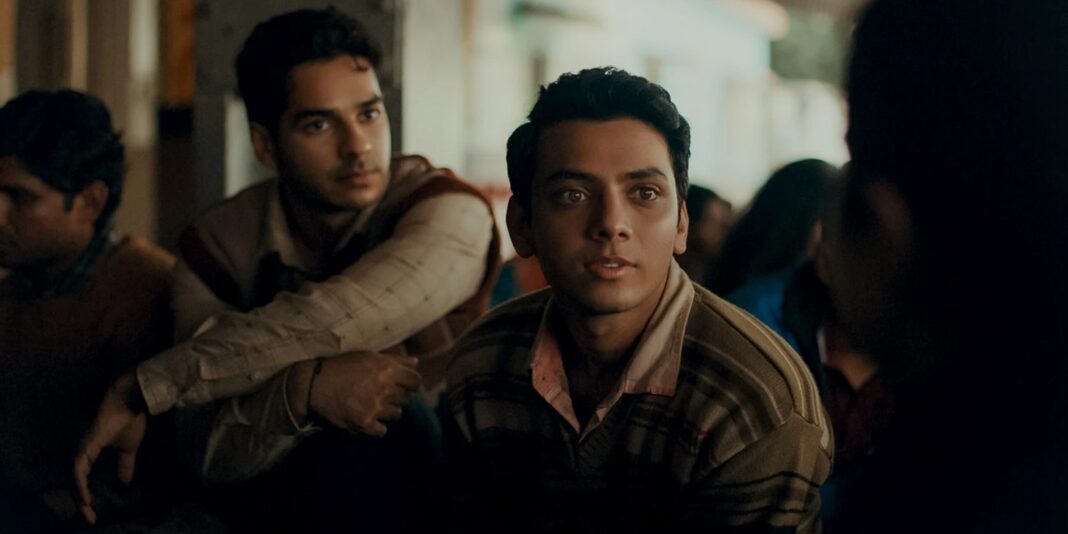
Produced by Dharma Productions and written/directed by Neeraj Ghaywan, Homebound is a quietly devastating portrait of friendship, aspiration, and dignity in contemporary India. India’s Oscar-shortlisted international feature follows two childhood friends from a North Indian village who pursue government jobs as police officers, believing the role offers stability, respect, and a pathway out of inherited marginalization. As they chase that dream, their bond is strained by entrenched inequality and the unforgiving realities of institutional power.and also stars Janhvi Kapoor.
Inspired by a 2020 New York Times op-ed by journalist Basharat Peer, the film is based on the true story of two marginalized young men, one Muslim and one Dalit, who leave their village in search of opportunity in nearby cities. Through their journey, Homebound exposes the lived realities of caste, religion, and class in modern India, while resisting easy moral binaries.
The film is also deeply personal for Ghaywan, who is Dalit and spent years concealing his caste identity. Making Homebound became an act of reclamation—an explicit rejection of the shame imposed by social hierarchies. In exploring why people migrate and what they are willing to sacrifice to be seen as “worthy,” Ghaywan interrogates the cost of survival in a deeply stratified society. At a time of growing polarization, the film argues for empathy as a bridge across religious, ideological, and social divides.
Lead performances by Ishaan Khatter as Mohammed Shoaib Ali and Vishal Jethwa as Chandan Kumar Valmiki ground the film in lived experience. Both actors underwent an intensive two-month immersion, living in North Indian villages in character wardrobe, working with dialect coaches across India’s vast linguistic landscape, and forging a genuine off-screen bond that strengthens the film’s emotional core.
Stylistically restrained and observational, Homebound avoids melodrama, allowing silences and small gestures to carry its emotional weight. What gives the film its universality is not its setting but its emotional truth. At its heart, Homebound is about aspiration and the desire to move forward without abandoning who you are. The ache of exclusion, the quiet shame of stalled dreams, and the tension between loyalty and survival are experiences that transcend borders.
Ultimately, Homebound suggests that “home” is less a place than a state of being but rather one defined by dignity, recognition, and safety. Its Oscar recognition underscores cinema’s power to cross language and geography, reminding us that the search for belonging is profoundly, and universally, human.
I recently had the opportunity to speak with writer-director Neeraj Ghaywan and the film’s two leads, Ishaan Khatter and Vishal Jethwa, about Homebound and the universal themes that anchor the film’s emotional power.