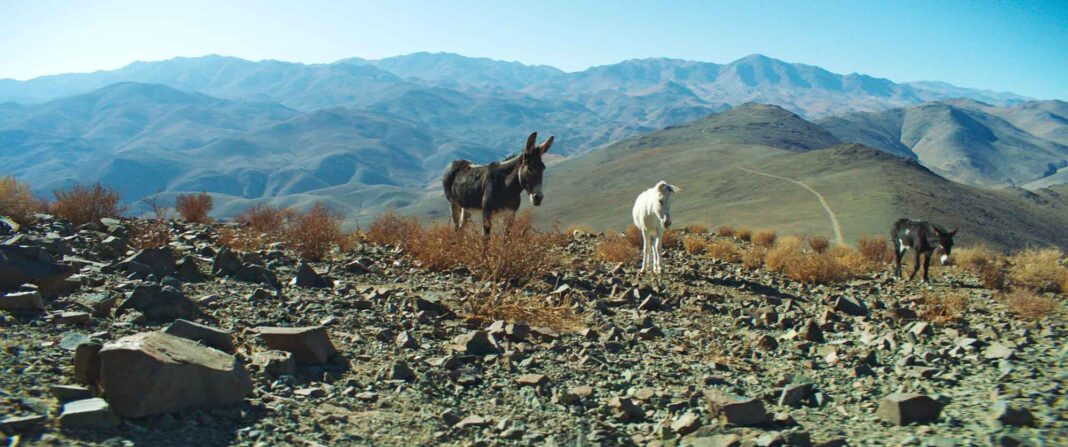
In Alison McAlpine’s Perfectly a Strangeness, she follows three donkeys as they encounter an astronomical observatory, gleaning plenty from silent moments of interaction between these animals and this technological space looking out at the universe.
Awards Buzz spoke with McAlpine about the experience of working with donkeys as her actors:
“It’s my first time I’ve worked with animals, right? And it was certainly a wonderful challenge. They were very gentle. I wrote a treatment in four movements, really a simple story. I wanted the donkeys in this unnamed desert, and then they had to go up the hill, and then they had to discover this abandoned observatory. They escaped several times, and I could tell you many adventures. But basically I wanted a combination between trying to direct donkeys more or less, but also trying to be completely open, as documentaries are, to what happens before your eyes. I had a wonderful DOP who could, when their ears started to get going, would just jump on those motions. It was fun.”
She also defended the nature of the film as a documentary despite her orchestration of its premise:
“I always find those definitions of documentary questionable. Even the most journalistic documentary, which is so important too, of course, as soon as you put a gaze, as soon as you put a frame on something, you’re directing. It’s a subjective viewpoint. What I love, anyway, in my filmmaking and, in films that I see, is that I want the naturalness and authenticity, and if that can come from a little direction, what documentary doesn’t direct? That to me is documentary. It’s just a different style than a classic political, I call it more television-style journalistic or whatever. I don’t mean that as a negative label, but those are more classical maybe. You could call it a hybrid, but I would call it a hybrid documentary.”
Perfectly a Strangeness is on the Oscar shortlist for Best Documentary Short.