Accepting that bad things happen is difficult enough for adults, but explaining the complexities of what should be and what often is can be exponentially more difficult with children. Yet we can’t shield them from everything, and far too often, events in the world – or much closer to home – occur and are perceived, leading to a necessary conversation that may not be fully understood. Josephine opens with a harrowing incident and looks at the devastating aftermath which further compounds the trauma a child has witnessed and forces her to engage with ideas she shouldn’t have to consider at such a young age.
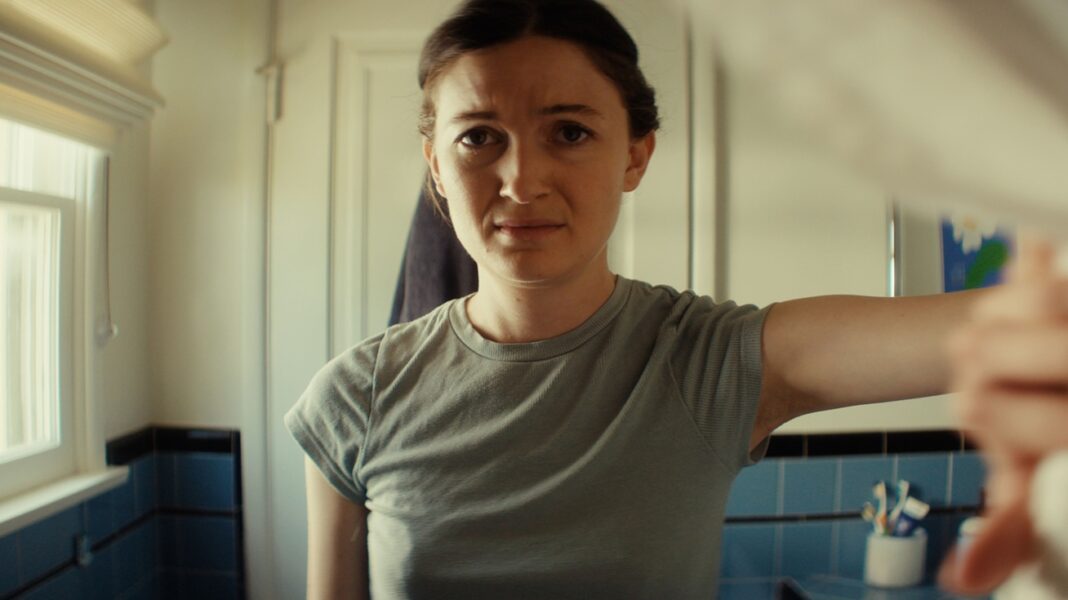
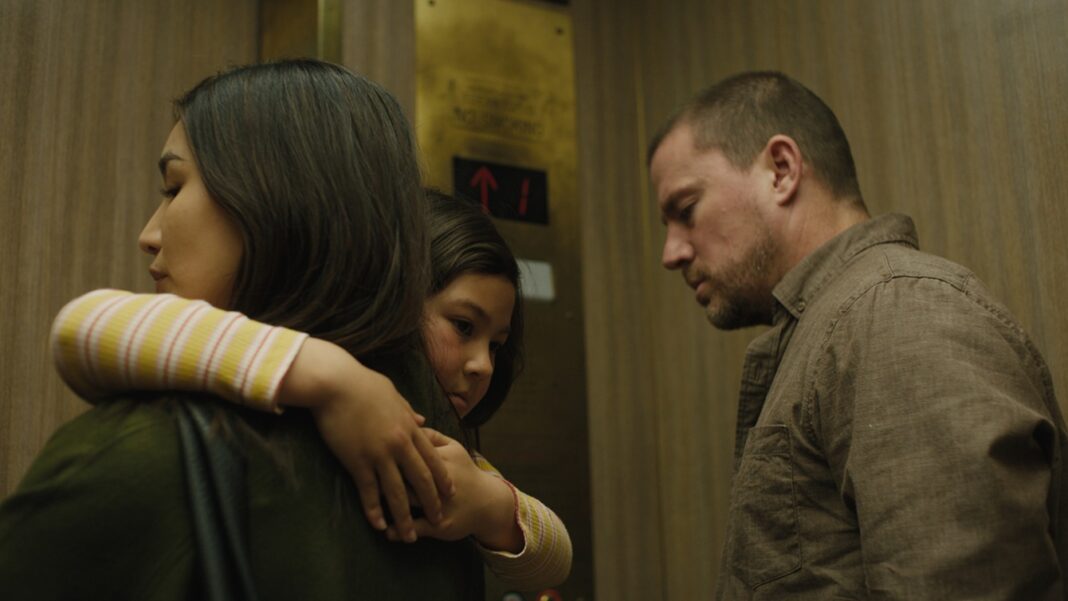
Josephine (Mason Reeves) is running with her father Damien (Channing Tatum) early in the morning and, when she gets too far ahead of him, witnesses a sexual assault. After Damien arrives and the perpetrator (Philip Ettinger) is arrested, Damien and his wife Claire (Gemma Chan) attempt to shield Josephine from thinking too much about what she saw but soon discover that, because the woman does not have any desire to be involved, any chances of convincing her rapist depend on testimony from Josephine.
This is the second feature film from director Beth de Araújo, who shared that she was inspired to write it after being haunted by something she saw as a child that wasn’t handled in the right way. She described this film as dealing with female fear and male aggression, and also noted that Reeves wouldn’t be watching the film from the beginning at the Sundance Film Festival premiere since the opening scene was not appropriate to be seen by someone so young. In a film about the struggle to protect children, it’s affirming to know that safeguards were taken in order to convey an important story without subjecting an actress in her first film to the scarring sight that her character has no choice but to see.
This film explores the many dynamics at play that influence how Josephine responds to what she’s been through. Damien calls the police as soon as he has chased the rapist off and ensured that his daughter is safe, and as soon as they come, he jumps in the front seat of the cruiser to help pursue him. He’s the ultimate alpha male who believes that his daughter should be able to take care of herself, and even offers to convince Claire that Josephine doesn’t need to see a psychologist if she agrees to enroll in self-defense classes. Claire doesn’t see eye-to-eye with Damien’s approach, particularly when he promises Josephine that this will never happen to her. The detectives, to their credit, are gentle and understanding, but they also won’t affirm Josephine’s belief that he’ll go away forever if convicted. Watching her count on her fingers to determine how old she would be when he was released if he got the maximum sentence is heartbreaking.
There’s a delicate balance of showing disturbing material here and covering very upsetting developments, like Josephine jumping to violent self-defense too quickly and shouting at her classmates that none of them could rape her, without showing anything that doesn’t need to be shown and would only be more devastating. It’s also quite bureaucratic and procedural as Josephine is brought in for questioning and introduced to a chaperone, who can’t be with her during the first interview. The inciting incident of this film is horrific and infuriating, but what ensues is also deeply terrible as multiple steps need to happen before any sort of accountability can actually occur.
Reeves makes an astonishing debut in a very measured turn far beyond her years, believably showcasing the anger and resentment Josephine feels as she learns more about what she’s seen yet still feels like the adults in her life aren’t telling her everything. She’s sure to have a very promising career ahead. Tatum is excellent, representing a girl dad who thinks he’s doing what’s best for his daughter but isn’t open to hearing other points of view, certain that he can take care of this situation until it becomes clear just how powerless he really is. Chan is much softer and more emotional as Claire, wearing the hurt that she feels from having to talk about these things with her daughter on her face as she struggles to find a middle ground with her husband on how to find some way to move past this awful event.
Josephine is an incredibly powerful film that navigates a disturbing subject in a layered and effective manner. Its portrait of a family feels raw and lived-in, and keeping things grounded from Josephine’s perspective sheds light on how much children do hear and how they respond when they only have some of the information. Having Ettinger appear in exactly the outfit Josephine sees him in during the assault as a haunting presence constantly following her around is a gut-wrenching visual tool that expresses the impact he’s had on her. This will undoubtedly be a difficult watch for some audiences, but the material is all handled in a sensitive and respectful way, delivering a thoroughly affecting and resonant film about the challenges of parenting in a deeply flawed world where justice doesn’t always prevail.
Movie Rating: 9/10
Josephine premieres in the U.S. Dramatic Competition at the 2026 Sundance Film Festival.