Serving a prison sentence has the potential to take away a person’s identity. Someone who is removed from society at a young age and grows old behind bars doesn’t get the same sense of the world as those free to exist within it as it evolves over time. Many people also die in prison, be it from natural causes, disease, or orchestrated events. But there is also an in-between that’s rarely discussed, those who develop debilitating mental conditions while in prison, raising an important question that doesn’t often secure their release: are they still the same person who committed the crime, and can they be held responsible for it in their current state?
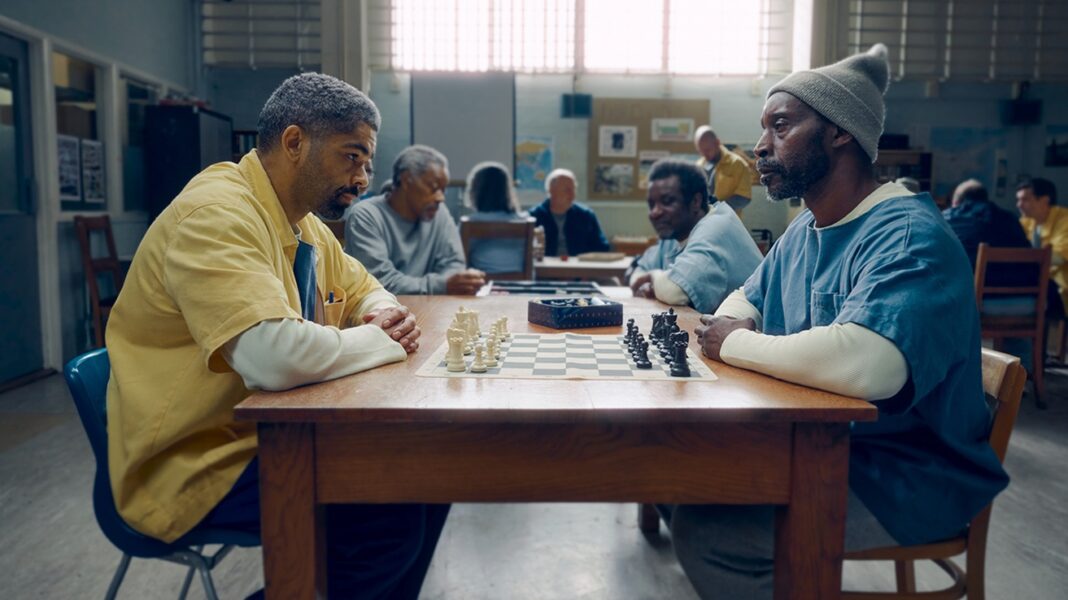
Frank (Kingsley Ben-Adir) is transferred to a new prison, many years out from his last incident and used to keeping his head down. He’s presented with a new opportunity that may also work in favor of his upcoming appeal, to work as a caregiver for prisoners with dementia. He’s assigned to assist the prickly Mr. Nelson (Rob Morgan), who seems to hold particular contempt for him from their very first meeting. While he’s initially frustrated with the work and a pairing he thinks isn’t working, he soon discovers that he does have the aptitude for this and is capable of relating to Mr. Nelson in his moments of need.
This marks the first English-language film from director Petra Volpe, who is coming off another healthcare-adjacent film, Switzerland’s Oscar-shortlisted Late Shift. The focus here is on a sector of the prison system that doesn’t typically get covered. Like Sing Sing, this film sensitively portrays its characters and doesn’t paint them with broad strokes. The nature of their crimes and what got them to where they are isn’t as important as who they are now, which begins with Frank raising his fist to a terrified Mr. Nelson after he shouts at him and belittles him, demonstrating the volatility of his condition and how understanding really is crucial. That’s something that another caregiver emphasizes when he gives Frank advice taken from how he cares for his white supremacist charge who, only on occasion, lashes out with racist slurs against the man who does so much for him.
This film deviates from typical prison dramas because the humanity of its protagonists comes from their shared experiences which they’re both going through in different ways. Frank sees that he quickly becomes a dependable and friendly face for Mr. Nelson, a calming presence who feels comfortable and familiar. Mr. Nelson isn’t the only one undergoing change, as Frank also softens as he develops an affinity for a man who previously both irritated and hated him. It’s a tender relationship between two men who have many regrets they can’t fully articulate, or in Mr. Nelson’s case, remember, but who find common ground in being with each other.
Ben-Adir and Morgan take characters who are already written well on the page and add so much to them with thoughtful, caring performances. Both have the fronts they put up to protect themselves from being attacked by others and to keep themselves sane as they serve out lengthy prison sentences, and watching those walls came down as they remain in the same physical space is powerful. This is an emotional film that goes on a journey with its protagonists as they come to see each other in a way that, were the circumstances even slightly different, would never have been possible. Volpe sensitively guides a story that speaks volumes and quietly humanizes its characters, extracting meaning from a place audiences have visited many times in films but never quite like this.
Movie Rating: 8/10
Frank & Louis premieres in the Premieres section at the 2026 Sundance Film Festival.