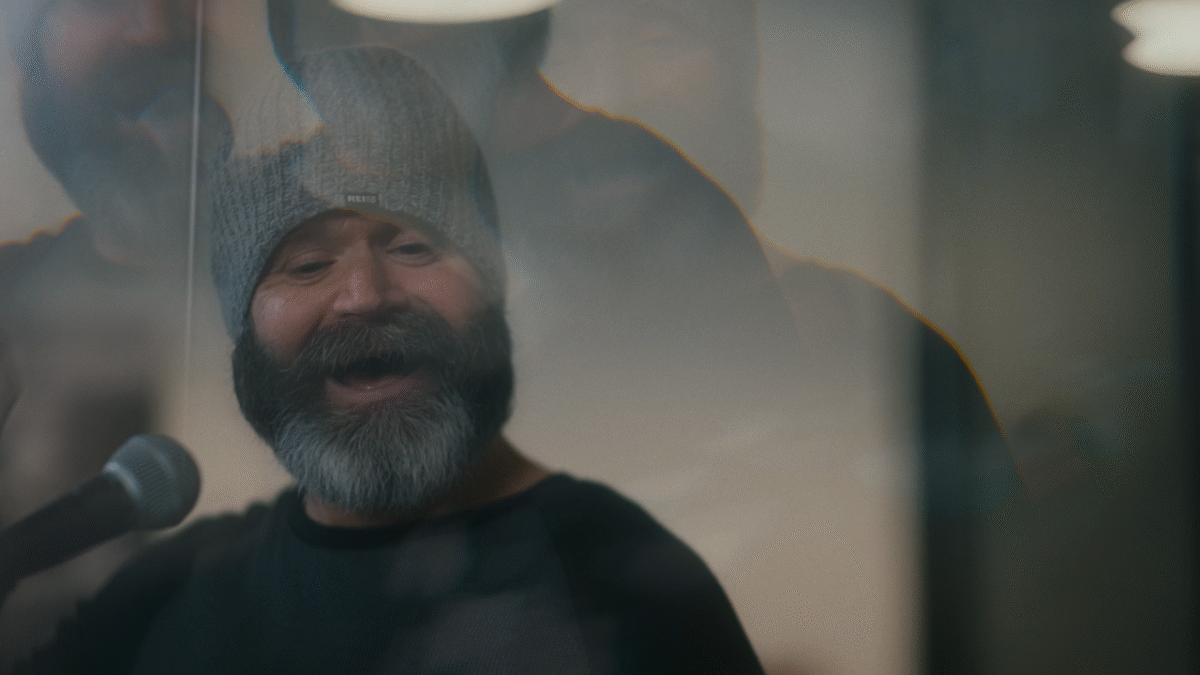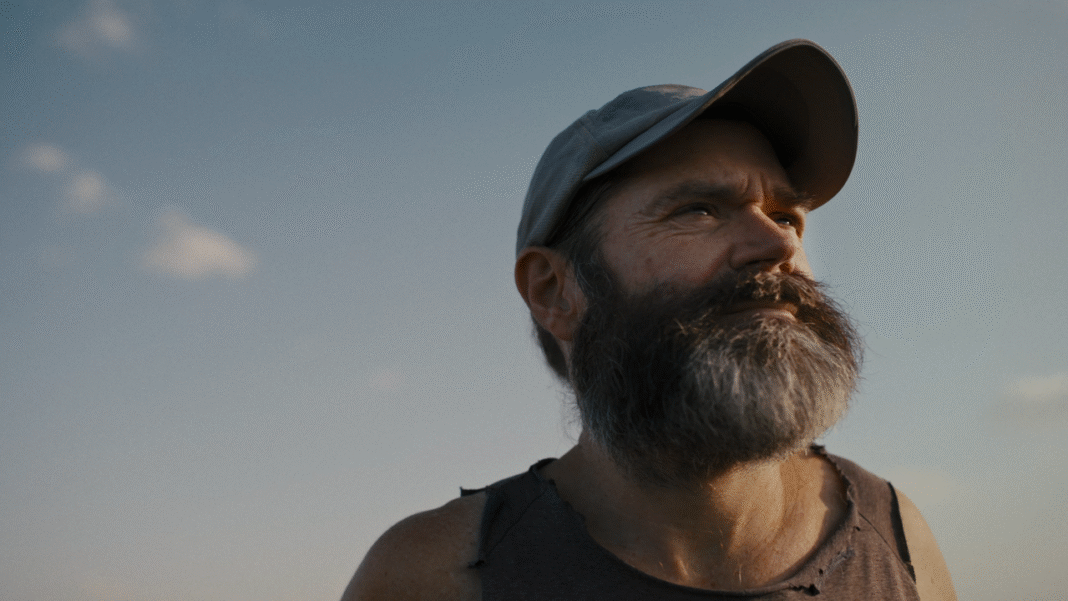
Award-winning documentary director and cinematographer Sam Price-Waldman brings to life a true story of resilience and the human experience through his immersive, character-driven storytelling in The Life We Have.
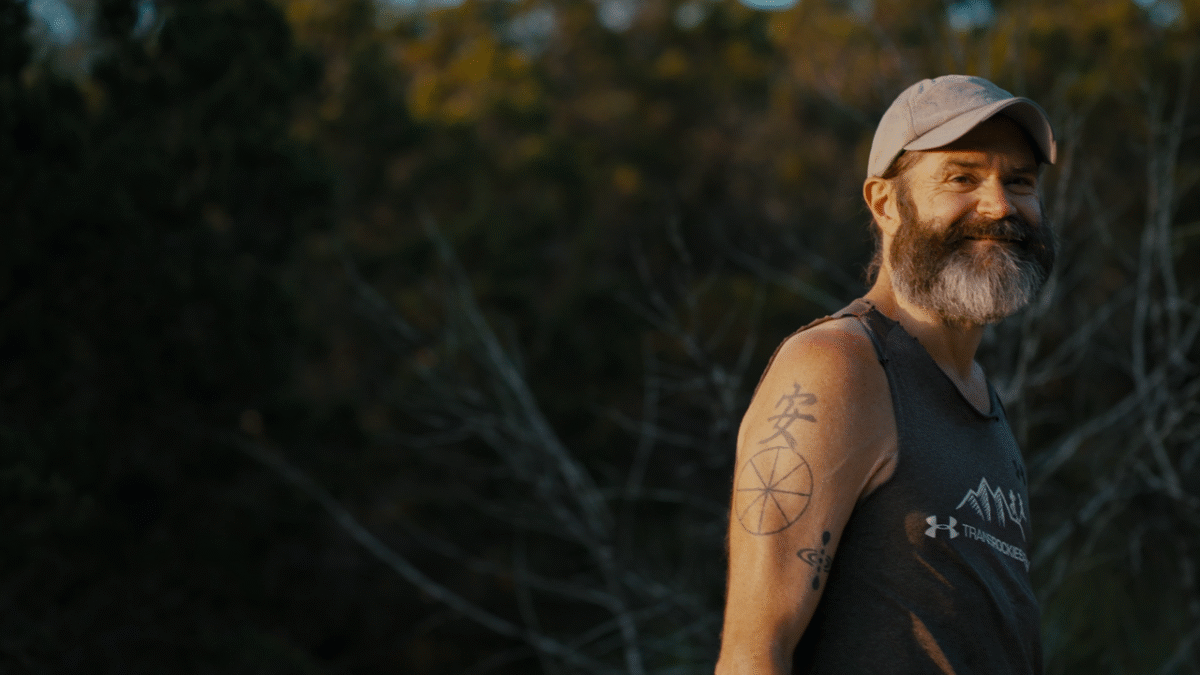
A festival favorite, Price-Waldman is known for championing stories that have environmental, personal, and social-impact themes. The Life We Have is a documentary short that follows the story of 48-year-old Rob Shaver, who, against all odds, has survived a terminal cancer diagnosis that was “supposed” to have taken his life decades ago.
This heartwarming film is about Shaver’s refusal to surrender to this disease. Three years ago, he decided to run at least a mile every single day, through rain and pain, not only creating a healthy habit but also a step-by-step journey that has led to a deeper look at mortality and gratitude.
Price-Waldman’s film asks viewers to ponder the meaning of life, the time we are given, perseverance when hope seems lost, and the importance of moving forward at all costs.
Awards Buzz spoke with Sam Price-Waldman about The Life We Have.
Awards Buzz: How did this come about?
Sam Price-Waldman: The initial connection with Rob came through REI, where he worked in San Antonio, and with whom Wondercamp, the production company, has a longstanding relationship with. They initially commissioned the film, and I was then brought in to direct the project.
My first Zoom meeting with Rob was over 3 hours long. I knew immediately from his humbleness, his realness, and his remarkable story that there was something genuine and powerful there worth sharing and magnifying through a documentary.
What started as a short 8-10 minute film soon became something much longer and more in-depth.
Awards Buzz: The film is about resilience, mortality, and endurance; these are recurring themes in your work. How did The Life We Have challenge or expand your understanding of those themes as a filmmaker?
Sam Price-Waldman: Over the year and a half spent making the film, my understanding of resiliency changed quite a bit. I think in my head, I’ve always had this kind of picture of being resilient as the guy walking uphill in a snowstorm. The weathered tree on the top of a mountain. These kinds of epic images and scenes speak to staying strong in the face of insurmountable odds.
While in many ways this still feels true for me, there was something about spending time with Rob and making The Life We Have that changed the meaning of resilience for me. Now, it feels quieter and more personal. A daily commitment to honoring life. A pact to just give what you have. And a little more. Over and over and over. Every single day.
Awards Buzz: What was the most surprising or revelatory moment during filming that reshaped how you viewed Rob’s journey?
Sam Price-Waldman: There are many to choose from. But I think the moment when he pulls out his hair was a big one for me.
Seeing him cut his hair, in the way that he does, I think I really understood, “Oh wow. This is not a big deal for Rob. Like, yes, it’s obviously super painful and intense, but there’s a level of acceptance, there’s a level of “I’ve been here before, many times in my life, and here we go again” that really hit home for me. It made me realize how his struggle with cancer has truly defined his perspective and approach to life.
Awards Buzz: How did you craft the cinematography to reflect Rob’s life while also adding your vision to it?
Sam Price-Waldman: I knew I wanted the cinematography to feel super intimate, real, and not overly stylized. Humble, like the way Rob is. I also felt an energy from Rob, which was really reflective and spiritual, and I knew that at times, I wanted the cinematography to match this quality too.
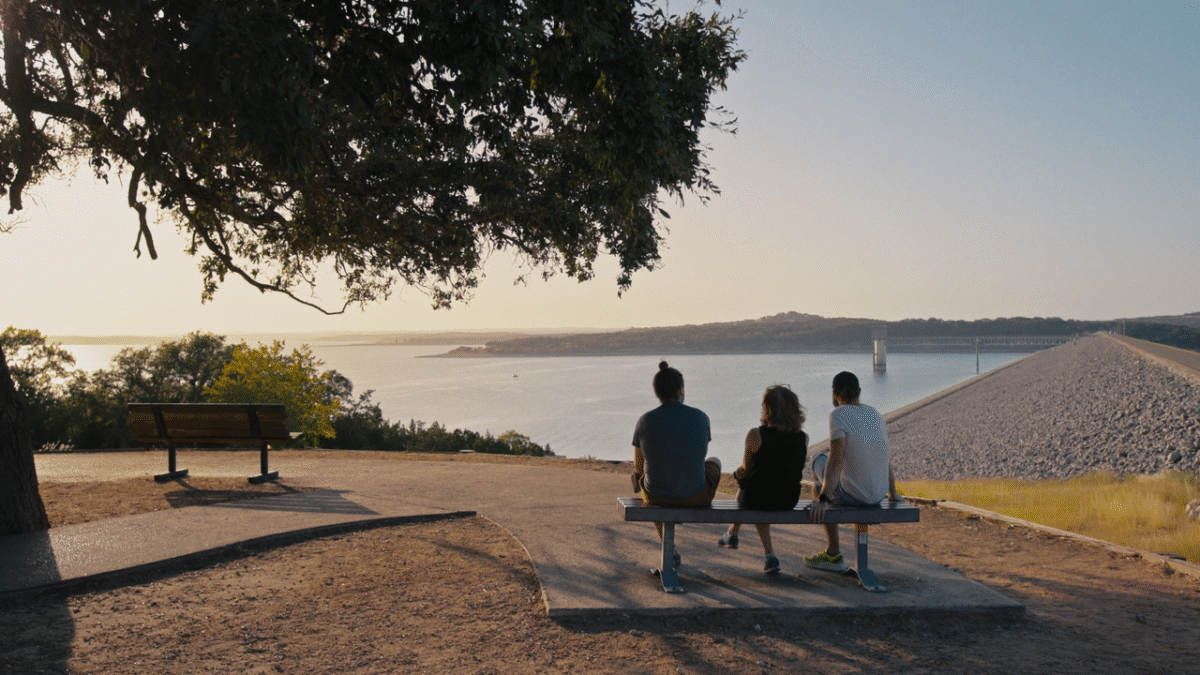
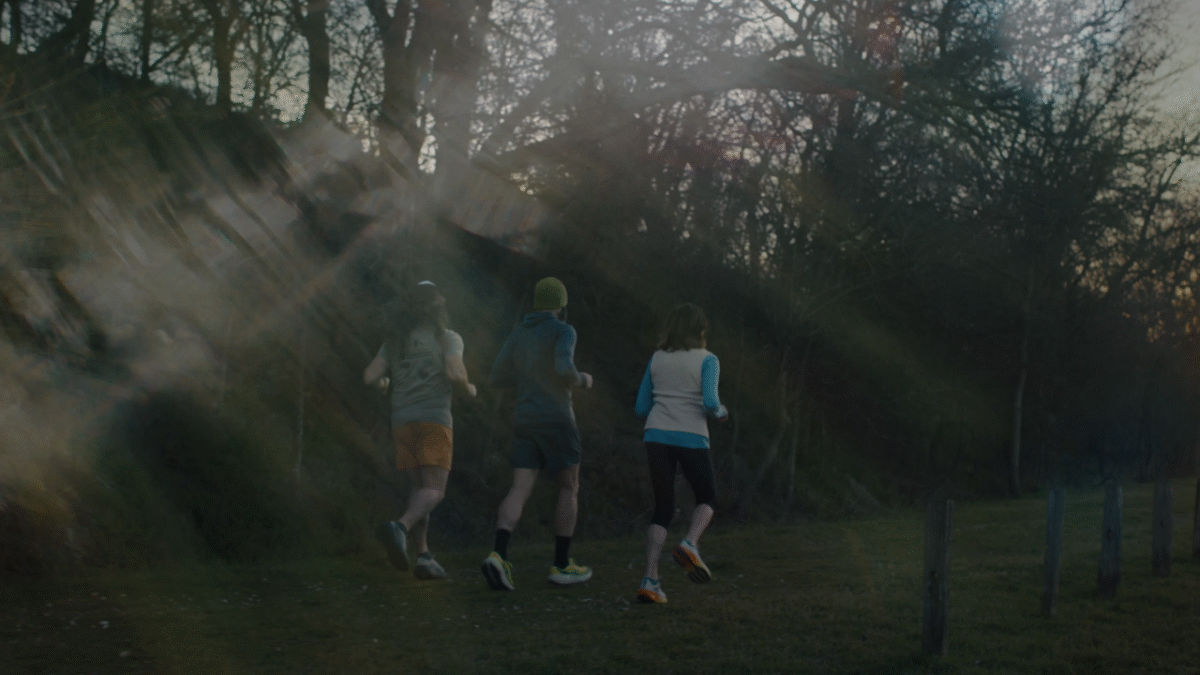
To achieve the look of the film, we shot almost entirely handheld with Canon Sumire primes, which have a soft, warm, natural feel. For certain moments in the film, we used prisms and other filters to add a more dreamlike quality to those sequences.
We also worked in super small crews. Usually, it was just me, my DP, and a sound person. I also made one extended trip to San Antonio, where it was just a sound operator and me.
Awards Buzz: Did working on this project shift your own personal relationship with endurance or daily practice?
Sam Price-Waldman: Absolutely. The editing of this film, in particular, was super difficult. We had a lot of footage to work with, plus a ton of different directions, interview material, and story threads to choose from. It was really tough to decide which aspects of Rob’s story to focus on and how to communicate them best.
Because of this, it was a sustained and often very challenging edit that took quite a few months. It meant both my editor, Tim, and I going back and forth with iteration after iteration, really working through some of these big topics. But definitely, I think sitting with Rob’s soundbites and philosophies in the edit helped us push through and make this film what it became.
In making this film, I’ve also become much more consistent in my own life, in both how I work and in making sure to walk and be outside every day, to be grateful, and to truly live as much as I can in the moment. I’m so thankful to Rob for this, and hope others will be inspired as well.
Awards Buzz: What did it take to build the level of vulnerability that Rob allows the audience to witness?
Sam Price-Waldman: First, it took a lot of time. Time for Rob to understand the filmmaking process and to get used to the cameras. Time for his story to unfold, and for real trust to be built.
There was also just a lot of sensitivity involved. Knowing that Rob is sharing something incredibly personal, vulnerable, and scary with us, I always felt super attuned to his comfort levels. In so many instances, I found myself putting down the camera and just being with Rob as a fellow human being. I made sure to make it clear that we were not here to capture or take anything from him, but rather allow him to share his story in a way that felt authentic.
In this way, we often just followed the natural flow of Rob and his family’s lives, not seeking to overly impose requests or a shotlist into the rhythm of the day. We captured so many moments and powerful conversations at their kitchen table, because this is where they naturally occur. I’m incredibly grateful to the Shaver family for allowing us into their lives in this way and for their trust in us.
Awards Buzz: Did you and Rob decide on the overall messages or life lessons you wanted audiences to take away from watching the doc?
Sam Price-Waldman: Yes, very much so. It was always an evolving conversation, but from the beginning, we both knew that we just wanted to help people. We wanted to help people suffering from cancer, illness, and disease, but also other people who might experience suffering in their lives. All of us.
So, as we went through production and the edit, I was often checking in with Rob to make sure we were truly achieving what we set out to do.
The funny thing is, I don’t think we really expected it to have at all the impact it has had. For so many months, it was just me, Rob, my editor Tim, and a small circle of trusted people, working on the story. But we made it because it felt right. We didn’t make it with any real expectations for how it might be received.
Screening at film festivals this year, I think we’ve all been completely taken aback at the response. Seeing how many people have been deeply affected by the film has been completely humbling. People coming up in tears to say thank you. People making commitments to start running. People calling their family members or writing letters to Rob, to name a few. It’s been incredible to witness.
Awards Buzz: As a storyteller who visually explores the natural world, how did the outdoor environments Rob runs through shape the emotional arc or pacing of the film?
Sam Price-Waldman: While I always love filming outdoors, the majority of this film ended up taking place in a single central location — their house, and neighborhood — outside of a few select running scenes. However, the natural world is something I know Rob values greatly, and it has certainly been a huge inspiration for me in my own life and work.
In thinking about the pacing of the film, I definitely took a lot of cues from the landscapes around San Antonio. Thinking of the edit rhythm as more like wind blowing softly through the trees, than a super-fast adventure film.
Awards Buzz: In your view, what aspect of The Life We Have seems to resonate most universally with audiences?
Sam Price-Waldman: It’s actually been really notable for me how many different aspects of the film seem to hook different people. For some, it’s the music. For others, it’s the running. For others, it’s the chemo scenes.
But if I had to choose one that’s the most prevalent, it’s Rob’s incredible wisdom and warmth. It’s the main thing that everyone seems to comment on: “What an incredible person.” And this, I completely agree with.
Awards Buzz: You’ve collaborated on major projects like The Vow and The Lincoln Project. What lessons from those large-scale, complex productions informed how you approached this very personal, intimate story?
Sam Price-Waldman: I learned a lot about vérité filmmaking and what it truly takes to achieve intimacy on camera, through these experiences. I learned that small crews are essential. That real, genuine caring is also a necessary ingredient for success. That we are all in this together, meaning the film crew, the subjects, and even the audience.
In thinking about it that way, I found myself continually approaching the film as a longer-term project, almost like a series or feature, rather than a short. I really spent the time to get to know Rob and to follow his story over a longer period of time than might be typical on a project like this.
The Vow and The Lincoln Project also dealt with really intense, often volatile subject matter. And after being in these types of situations and productions for years, I think I have gained a much greater understanding of the importance of trust and transparency in the filmmaking process. I wouldn’t have been able to make The Life We Have in at all the same way without them.
Awards Buzz: Rob’s continued survival defies medical expectations. How did you navigate portraying the uncertainty of his prognosis without reducing his identity to his illness?
Sam Price-Waldman: This was a tough one. From the beginning, I felt that there was a real trap, or rather, a series of traps, which we would need to avoid in the making of this film. In many ways, it’s a cancer film, but it’s not really.
From a medical perspective, there are so many interesting details about Rob’s history, about how many statistics and odds he has overcome. But in the telling of the story, I knew we didn’t want it to become a medical documentary. Yes, it’s a big part and reason why the story is a story to begin with, but I personally felt that the real heart of it is Rob himself. The human behind it all. The struggles, the humor, the things that speak to all of us, whether we have cancer, illness, or not.
Awards Buzz: The film invites viewers to confront the uncomfortable truth that time is both limited and unpredictable. As a director, how do you decide when and how to bring the audience into that philosophical space?
Sam Price-Waldman: Yes, it’s very true, and it’s something that felt very real during production and the making of this film.
Most of our shoots were planned on the fly, changing from day to day, hour to hour, or minute to minute, depending on Rob’s health. Planning ahead with Rob was an extremely difficult thing to do, and most of our shoots were confirmed just a couple of days in advance.
It’s a headspace and a way of being that is quite challenging for our planning-based minds. But it also came to define the footage that we captured.
Interestingly, it’s this exact philosophy of being only in the current day, which I think Rob would say has kept him alive so long. When he was first told, “You have an 85% chance of dying in 5 years,” he knew that he couldn’t get caught in a loop of thinking about the future or what doctors were telling him. So, he had to retrain himself to just think about the day in front of him, and that day only.
Needless to say, there is still fear and uncertainty present, but I didn’t want that to be the focus. I wanted that section in the film to be somewhat limited, and waited until over halfway through to address it directly.
Awards Buzz: What guided your decisions in shaping the rhythm of the film, especially when working with such an emotionally heavy subject?
Sam Price-Waldman: It’s definitely an emotionally heavy subject, and I didn’t want to sugarcoat the reality. But I also knew we would need to have a number of different colors and shades of emotions, to make it all flow and work together, and for those really intense moments to land more fully.
I knew that music would be a central component of the film. That running sequences would help bring variety to the often slower pace of scenes indoors. I also knew that using humor would be essential. Also having repeated moments with Emmett, their dog, to keep things light and provide a different mirror to what was happening in a scene.
Awards Buzz: Was there a turning point in production or editing when you realized what The Life We Have was truly about?
Sam Price-Waldman: Not really. I’m still not fully sure. I think, truthfully, it means a lot of different things to a lot of different people.