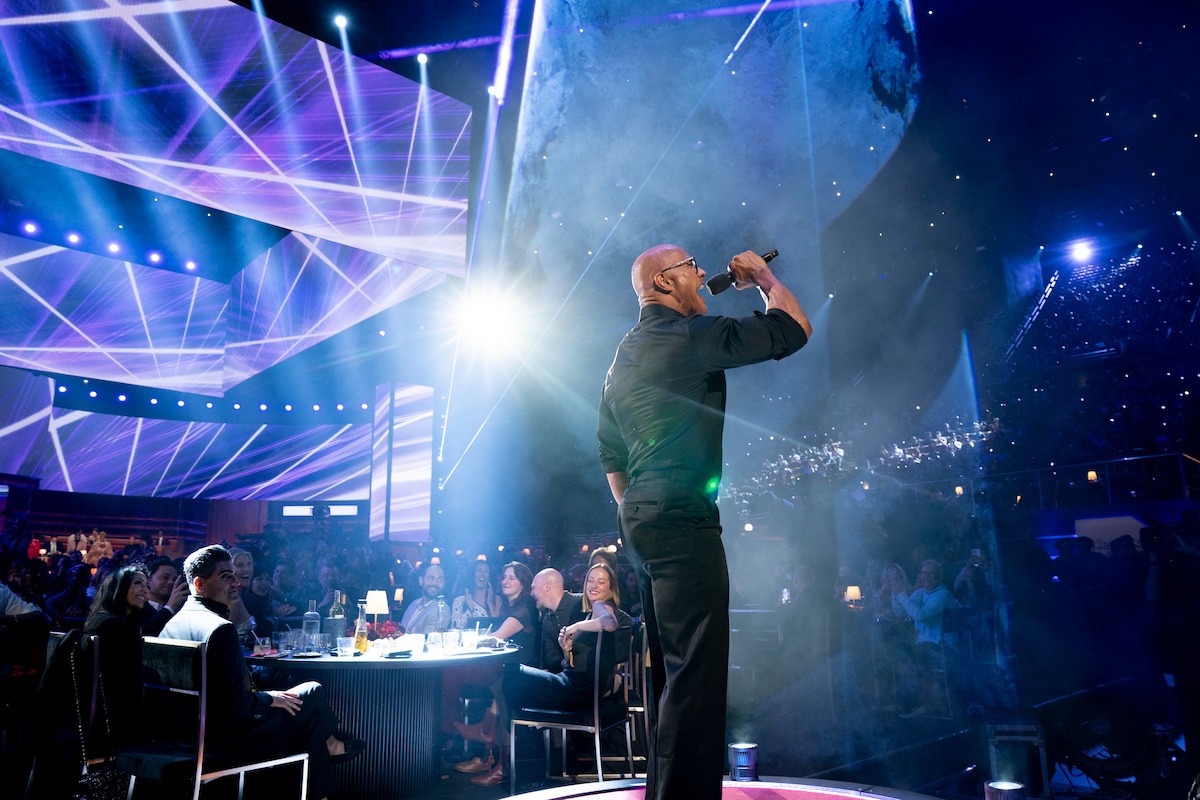
At a time when the instinct to preemptively apologize has become something close to an industry reflex, someone had to hold the line. Netflix did exactly that with the Netflix Is A Joke Festival, a sprawling week-long comedy takeover of Los Angeles produced in partnership with Live Nation that featured over 350 events and closed on May 10th with a live roast of Kevin Hart that streamed globally and is now available on the platform. In embracing the roast format in its most unfiltered and confrontational form, the streamer trusted that an audience hungry for genuine, unmanaged comedy would show up for it. They were right.
To understand the weight of the evening, it helps to understand the weight of its subject. Kevin Hart is one of the most commercially successful stand-up comedians in history, a performer who built a global brand through relentless touring, a string of blockbuster film appearances, and a talent for translating personal vulnerability into mainstream entertainment. He has headlined arenas, broken box office records, and cultivated a media presence that extends well beyond comedy into sports, fitness, and lifestyle branding. He has also spent the better part of two decades making his height the centerpiece of his own act, which meant that by the time his peers finally got the microphone, they had a target he had essentially painted on himself. And that was before anyone got to the rest of it. A homophobic tweet resurfaced in 2019 cost him the Academy Awards hosting gig just days after he was announced. He was filmed at a party hosted by Sean Combs, later the subject of federal criminal charges, at a time when the full scope of what happened at those gatherings was becoming a matter of public record. His marriage to Eniko Parrish survived a highly publicized infidelity scandal that played out in tabloids and, eventually, in Hart’s own comedy. Any one of those chapters would be enough to fuel a roast set. Together, they made Hart one of the most target-rich subjects the format has seen in years.
Netflix and the production team understood what that material demanded. Rather than delivering a sanitized celebrity tribute dressed in roast clothing, the evening leaned fully into the format’s most essential and uncompromising qualities. The discomfort was personal, the jokes were specific, and the willingness to push into genuinely uncomfortable territory was consistent throughout a runtime that stretched well into the night.
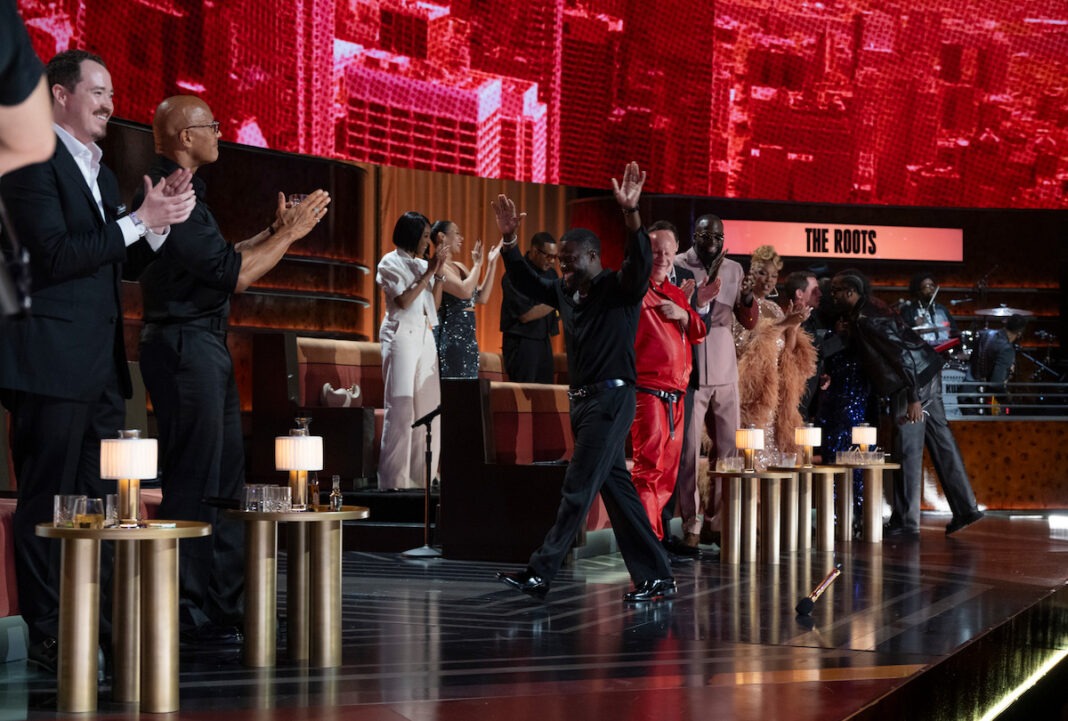
Tom Brady set the tone early and with surprising command of the room. Following his own Netflix roast two years prior, Brady arrived knowing exactly what the evening required. He addressed Hart’s marital difficulties directly and on the record, with Eniko seated visibly in the audience, and returned to the Academy Awards controversy with a bluntness that signaled to every performer who followed that restraint was neither expected nor desired. The production was built to sustain that energy at scale. The Roots served as the house band throughout, and the evening was bookended by musical performances: Usher opened with a custom tune aimed squarely at Hart, and Meek Mill closed the night hours later.
The roasting lineup was anchored by Shane Gillis, who also served as host, alongside Pete Davidson, Chelsea Handler, Draymond Green, Tony Hinchcliffe, Regina Hall, Sheryl Underwood, Jeff Ross, Big Jay Oakerson, and Na’im Lynn. As the evening progressed, some of the special guests, including Dwayne Johnson, took playful shots at the roster itself, joking that the lineup lacked the kind of marquee comedy names one might expect for a performer of Hart’s stature. The absence of recent roast masters like Nikki Glaser or Will Ferrell was noticeable enough that it became something of a running undercurrent. But those jokes were rendered largely moot by the time the night was over. When Johnson finally appeared, commanding the room with the ease of someone who has spent decades as the biggest star in whatever space he occupies, any lingering sense that the evening was short on star power dissolved entirely. He was joined throughout the night by special guests including Venus and Serena Williams, Lizzo, Teyana Taylor, and Katt Williams, while notable attendees in the audience included Jennifer Lopez, Tiffany Haddish, Hasan Minhaj, Jimmy O. Yang, and John Stamos.
The material directed at Hart’s co-roasters was as unsparing as anything aimed at the man of the hour. Pete Davidson’s father, a firefighter who died responding to the September 11th attacks, was referenced with the bluntness the roast format requires its participants to absorb without flinching. Chelsea Handler’s age and extensive romantic history were treated as recurring targets across multiple sets. Sheryl Underwood’s late husband, who died by suicide, was not spared either, a moment that tested the room’s limits and illustrated how the roast format asks everyone present, not just the honoree, to accept that nothing is off the table.
Of everyone on the roster, Sheryl Underwood understood the assignment most completely. She was fearless without being reckless, and the room felt every bit of the difference. Her takedown of host Shane Gillis landed the evening’s biggest single reaction: “Shane Gillis, the only man in this room who lost a Netflix special and got invited to a January 6th reunion.” Underwood delivered it without hesitation, letting the room come to her rather than pushing through it.
Katt Williams generated a different kind of electricity. Given the extensively documented and publicly aired tension between Williams and Hart, there was genuine uncertainty about what his appearance would produce. Williams answered it the way only a performer of his particular vintage can: by letting the anticipation do the work, by understanding that the room was already leaning forward before he said a word, and then delivering punchlines that made the buildup feel entirely earned.
The evening also exposed the inherent difficulty of the roast format when performers step outside comedy’s professional ranks. Draymond Green faced an uphill battle with a crowd whose sympathies skewed away from him, and the material never quite found the footing needed to overcome that deficit. Teyana Taylor’s appearance generated genuine excitement that the set itself could not fully sustain. Regina Hall’s visible discomfort sitting near Handler, caught repeatedly on camera, had a way of deflating jokes before they could fully land. None of these lulls were fatal to the overall momentum, but they served as useful illustrations of how demanding the form truly is and how much craft separates the professionals from the enthusiastic participants.
Dwayne Johnson’s arrival late in the evening provided a significant energy boost. There is an inherent novelty in watching Johnson, a performer who has built his entire second career on a controlled and family-friendly public image, operating inside a format that requires abandoning that management entirely. He leaned into the absurdity of his own persona with evident enjoyment. The one sequence that began to strain was a prolonged flirtation between Johnson and Eniko Hart, with Chelsea Handler inserting herself into the bit, that ran long enough to feel more like a scripted sketch than a live exchange and began diluting the spontaneity the format depends on. Still, Johnson’s sheer presence and willingness to be genuinely reckless in the moment carried the segment and gave the evening one of its most memorable closing stretches.
Hart’s rebuttal was strategically calibrated. Rather than attempting to compete with the professional roasters on their own terms, he aimed for something more sustainable: a celebratory atmosphere that acknowledged everything the evening had put him through without being overwhelmed by it. The extended sponsor acknowledgments slowed the pacing during an already lengthy closing stretch, but Hart navigated the specific challenge of closing a show that had spent hours dismantling his reputation with enough self-awareness and warmth to land the evening where a roast should: in a spirit of communal affection beneath all the professional brutality.
What the roast of Kevin Hart ultimately demonstrated is that the format only works when everyone involved agrees to take it seriously. Its power comes from the discomfort it generates, and that discomfort evaporates the moment a production begins protecting its subjects or softening edges in response to anticipated sensitivities. Netflix made neither of those concessions. The result was a genuinely unpredictable evening of live television that captured the particular electricity of a large room full of people watching performers risk something real in real time. In an era when that sensation is increasingly difficult to manufacture, the Hart roast delivered it with consistency and, at its best moments, with considerable force.